



Farnesyl Transferase
Ftase
Farnesyl transferase is a zinc-dependent enzyme that catalyzes the attachment of a farnesyl lipid group to the sulfur atom of a cysteine residue of numerous proteins involved in cell signaling including the oncogenic H-Ras protein. Farnesyl transferase regulates the activation of Ras protein and consequently affects intracellular signal transduction, cell growth and proliferation.
Farnesyl transferase is an essential enzyme at downstream of mevalonate (MVA) pathway. Farnesyl transferase catalyzes the farnesylmoieties of farnesyl pyrophosphate (FPP) coupled to Ras protein, which is dependent on farnesylation anchoring itself in membrane for its activity. Farnesyl transferase inhibitors are small-molecule inhibitors that selectively inhibit farnesylation of a number of intracellular substrate proteins such as Ras. Farnesyl transferase inhibitors represent a new class of agents that target signal transduction pathways responsible for the proliferation and survival of diverse malignant cell types.
All Product Categories
-
Farnesyl Transferase Related Products (97)
Related Products (97)

-
Antibodies (1)
-
Squalene synthase-IN-2
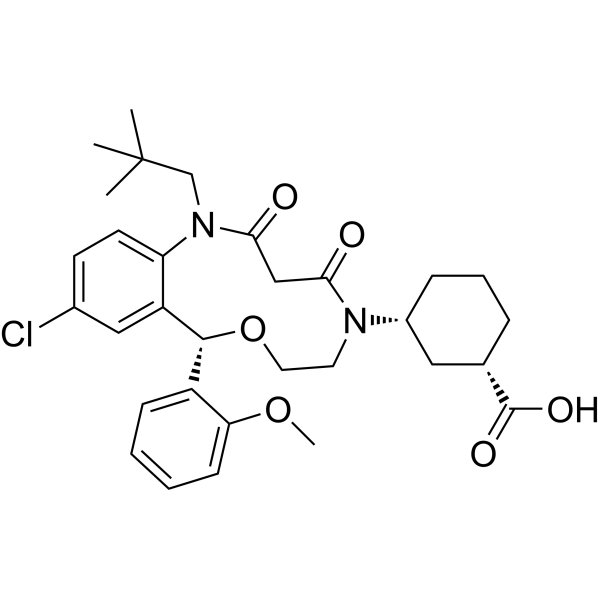 0 ImagesCat. No.: HY-163452Squalene synthase-IN-2 (comppund isomer A-(1S, 3R)-14i) is an orally active squalene synthase inhibitor with IC50 values of 3.4, 99 nM for squalene synthase and cholesterol synthesis, respectively. Squalene synthase-IN-2 reduces plasma cholesterol and triglyceride.
-
(Rac)-Lonafarnib
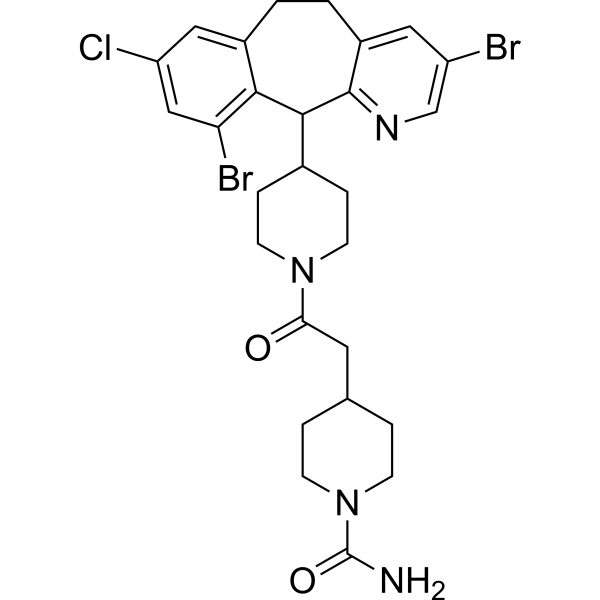 0 ImagesCat. No.: HY-15136BCAS No.: 193275-86-4Synonyms: Sch66336 racemate(Rac)-Lonafarnib (Sch66336 racemate) is an isomer of Lonafarnib (HY-15136). Lonafarnib (Sch66336) is an orally active, blood-brain barrier penetrant farnesyltransferase (FPTase) inhibitor. Lonafarnib increases the phosphorylation levels of Akt, CaMKII and CREB, upregulates BDNF expression in the hippocampus, elevates the content of α7nAChR on cell membranes, and blocks the isoprenylation of H-Ras. Lonafarnib repairs synapses and reverses spatial memory deficits in Aβ1-42 model mice. Lonafarnib inhibits RSV fusion and replication, and alleviates virus-induced lung injury. Lonafarnib activates the lysosomal and autophagic pathways, and reduces the phosphorylation and aggregation of tau. Lonafarnib acts synergistically with Sorafenib (HY-10201) to promote apoptosis, and inhibits the proliferation and invasion of melanoma cells. Lonafarnib inhibits the farnesylation of progerin, repairs nuclear membrane defects, and activates the cGAS-STING-STAT1 signaling pathway. Lonafarnib can be used in research related to diseases including Alzheimer's disease, viral infections, melanoma, and progeria.
-
FTI-2148
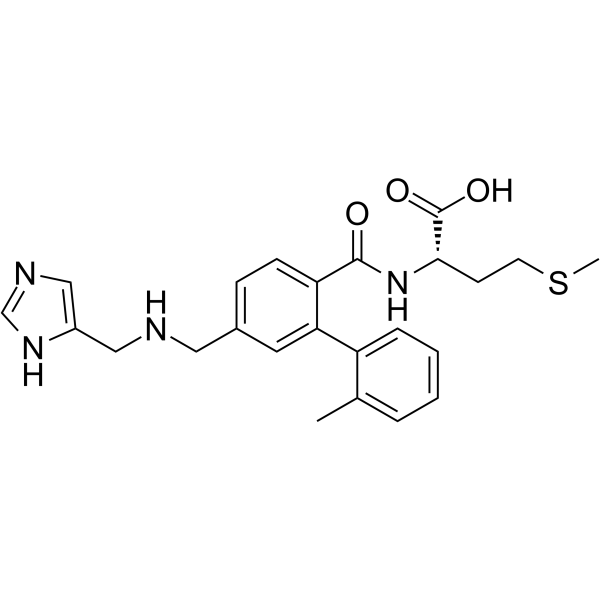 0 ImagesCat. No.: HY-118916CAS No.: 251577-09-0FTI-2148 is a RAS C-terminal mimetic dual farnesyl transferase (FT-1) and geranylgeranyl transferase-1 (GGT-1) inhibitor with IC50s of 1.4 nM and 1.7 μM, respectively.
-
RPR107393 free base
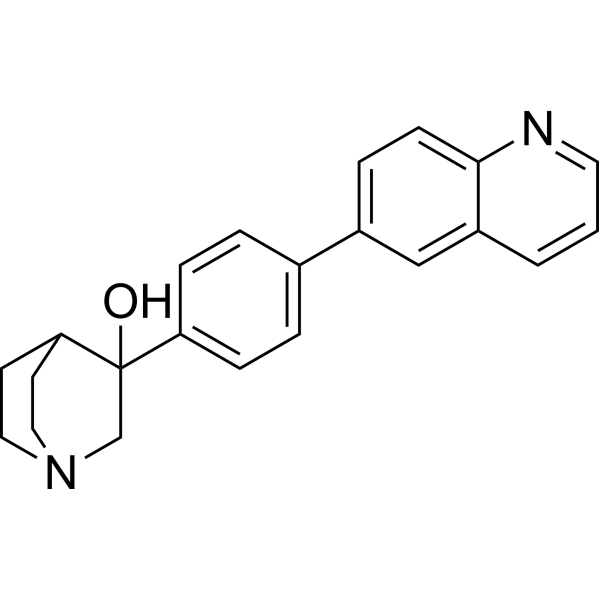 0 ImagesCat. No.: HY-100299CAS No.: 197576-78-6RPR107393 free base is an orally active potent selective squalene synthase (SQS) inhibitor. RPR107393 free base inhibits rat liver microsomal squalene synthase with an IC50 value of 0.8 nM. RPR107393 free base reduces triglyceride biosynthesis by suppressing fatty acid biosynthesis via an increase in intracellular farnesol and its derivatives. RPR107393 free base reduces plasma cholesterol in rats and marmosets. RPR107393 free base can be used for metabolic disease research, such as hypercholesterolemia, hypertriglyceridemia and atherosclerosis[1][2].
-
BMS-187745 tripotassium
 0 ImagesCat. No.: HY-16108ACAS No.: 157126-15-3BMS-187745 tripotassium (Compound 1) is a potent squalene synthase inhibitor.
-
Lipiferolide
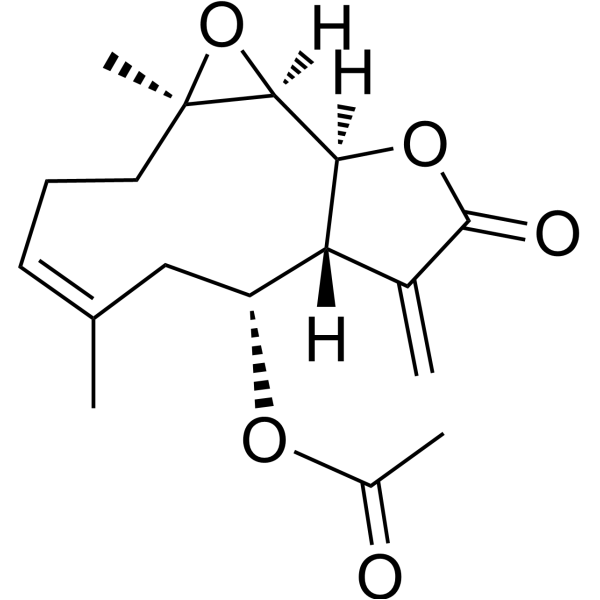 0 ImagesCat. No.: HY-N3378CAS No.: 41059-80-7Lipiferolide is an antiplasmodial agent (IC50: 1.8 μg/mL) that can be isolated from Liriodendron tulipifera. Lipiferolide also inhibits FPTase, and has antitumor activity.
-
alpha-Hydroxy farnesyl phosphonic acid
 0 ImagesCat. No.: HY-128041CAS No.: 148796-53-6Synonyms: Hydroxyfarnesyl phosphateα-hydroxy Farnesyl phosphonic acid is a nonhydrolyzable analog of farnesyl pyrophosphate which acts as a competitive inhibitor of farnesyl transferase (FTase). At concentrations greater than 1 μM, α-hydroxy farnesyl phosphonic acid inhibits the processing of Ras in Ha-ras-transformed NIH3T3 cells.
-
Zaragozic acid A trisodium
 0 ImagesCat. No.: HY-116290ACAS No.: 144541-82-2Synonyms: Squalestatin S1 trisodiumZaragozic acid A trisodium is a fungal metabolite that acts as a reversible competitive inhibitor of squalene synthase.
-
BMS-214662 mesylate
 0 ImagesCat. No.: HY-16111A1CAS No.: 474010-58-7BMS-214662 mesylate is a potent and selective farnesyl transferase inhibitor with an IC50 of 1.35 nM. BMS-214662 mesylate exhibits potent antitumor activity and can be utilized in cancer research.
-
A-176120
 0 ImagesCat. No.: HY-117807CAS No.: 185049-54-1A-176120 is a selective inhibitor of farnesyl transferase (IC50=1.2 nM) based on a farnesyl pyrophosphate (FPP) analog, with superior selectivity against GGTaseI (IC50=423 nM), GGTaseII (IC50=3000 nM), and SSase (IC50>10 μM). A-176120 inhibits ras processing in H-ras transformed NIH3T3 cells and HCT116 K-ras mutant cells (ED50=1.6 and 0.5 μM, respectively). A-176120 has antiangiogenic and antitumor activities in vivo and reduces capillary structure formation and VEGF secretion.
-
L-744832
 0 ImagesCat. No.: HY-116428CAS No.: 160141-09-3L-744832 is a farnesyl transferase inhibitor. L-744832 effectively inhibits the farnesylation of H-Ras and N-Ras, but has little effect on K-Ras treatment. L-744832 not only directly targets the oncogenic pathway by inhibiting Ras farnesylation, but also enhances radiosensitivity by restoring TGF-β signaling through epigenetic reprogramming. L-744832 can induce cell cycle arrest and apoptosis. L-744832 can be used in combination therapy studies for Ras-driven tumors such as pancreatic cancer.
-
Pepticinnamin E
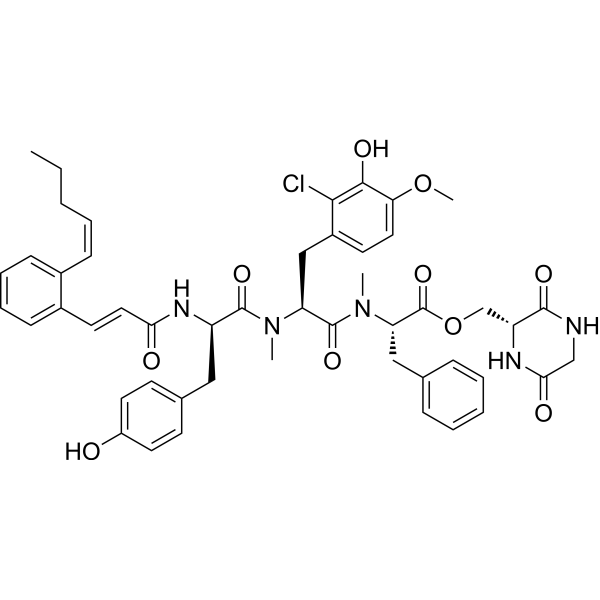 0 ImagesCat. No.: HY-124205CAS No.: 147317-36-0Pepticinnamin E is a Farnesyltransferase (FTase) inhibitor (IC50=42 µM). Pepticinnamin E can be used in cancer and malaria research.
-
L-731735
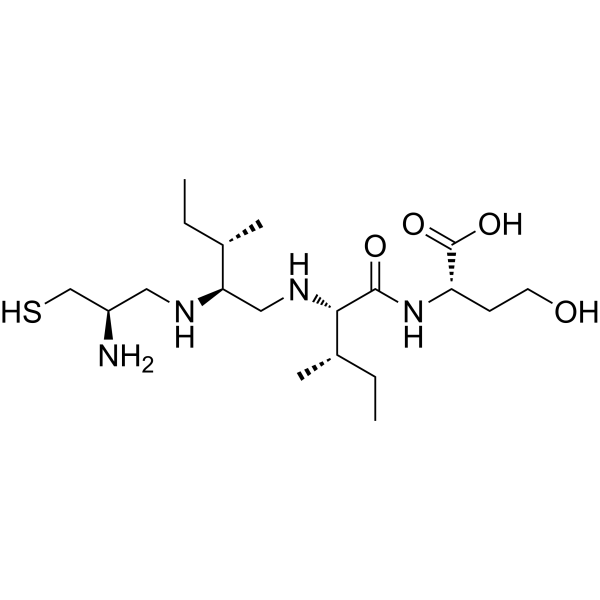 0 ImagesCat. No.: HY-129273CAS No.: 149756-20-7L-731735 is a selective FPTase inhibitor that can inhibit ras-dependent cell transformation. L-731735 can be used in cancer research.
-
SQS-IN-1
 0 ImagesCat. No.: HY-178158CAS No.: 2306302-57-6SQS-IN-1 is a squalene synthase (SQS) inhibitor. SQS-IN-1 exhibits potent and broad-spectrum anti-proliferative effects on both mouse and human lung cancer cell lines. SQS-IN-1 inhibits DNA replication and the cell cycle, causing mitochondrial hyperpolarization and inducing cell apoptosis. SQS-IN-1 inhibits cell migration and invasion. SQS-IN-1 can be used to the study of lung cancer.
-
Antifungal agent 46
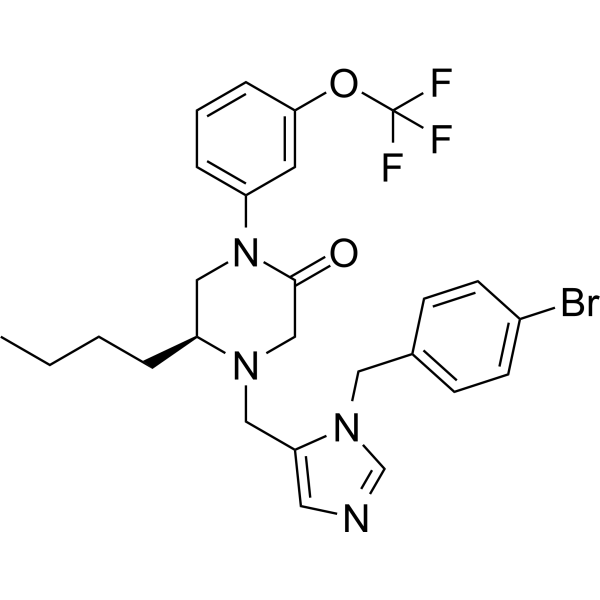 0 ImagesCat. No.: HY-151566CAS No.: 2842067-19-8Antifungal agent 46 (compound 2f) is a potent antifungal agent. Antifungal agent 46 prevents Ras signaling by inhibiting protein farnesyltransferase.
-
Ftase inhibitor III
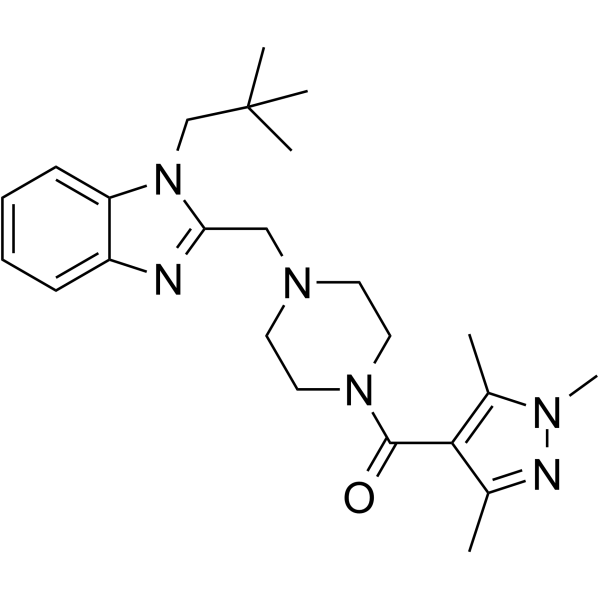 0 ImagesCat. No.: HY-142655CAS No.: 2710375-18-9Ftase inhibitor III is an anion-dependent Farnesyltransferase inhibitor from a phenotypic screen.
-
YM-53601 free base
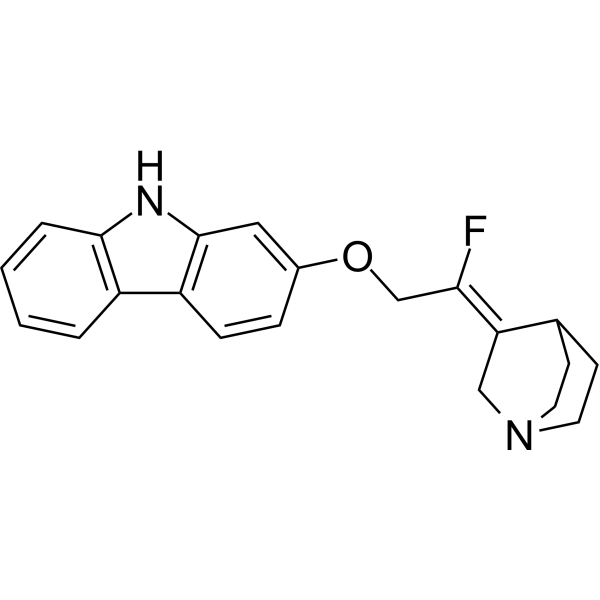 0 ImagesCat. No.: HY-100313CAS No.: 182959-28-0YM-53601 free base, a squalene synthase inhibitor, reduces plasma cholesterol and triglyceride levels in vivo. YM-53601 free base inhibits squalene synthase derived from human hepatoma cells with an IC50 of 79 nM. Lipid-lowering agent. YM-53601 free base is also an inhibitor of farnesyl-diphosphate farnesyltransferase 1 (FDFT1) enzyme activity and abrogates HCV propagation.
-
AZD3409
 0 ImagesCat. No.: HY-10062CAS No.: 345915-10-8Synonyms: EBP-921AZD3409 is a prenyl inhibitor that exhibits inhibitory activity against both farnesyl transferase and geranylgeranyl transferase I. AZD3409 inhibits the growth of breast cancer cells, with IC50s of 220 nM (MDA-MB-468), 180 nM (MDA-MB-361), and 290 nM (SK-Br-3). AZD3409 significantly reduces the activation level of AKT in breast cancer cell lines. AZD3409 induces G0/G1 phase arrest in MDA-MB-468 cells, causes G2/M phase arrest in MDA-MB-361 cells. AZD3409 can be used for the study of breast cancer.

-
RPR107393
 0 ImagesCat. No.: HY-100299ACAS No.: 190841-57-7RPR107393 is an orally active potent selective squalene synthase (SQS) inhibitor. RPR107393 inhibits rat liver microsomal squalene synthase with an IC50 value of 0.8 nM. RPR107393 reduces triglyceride biosynthesis by suppressing fatty acid biosynthesis via an increase in intracellular farnesol and its derivatives. RPR107393 reduces plasma cholesterol in rats and marmosets. RPR107393 can be used for metabolic disease research, such as hypercholesterolemia, hypertriglyceridemia and atherosclerosis.




